Senator Adeola Yayi and The Fruitless Debate on Origin
By Adewale Adeoye
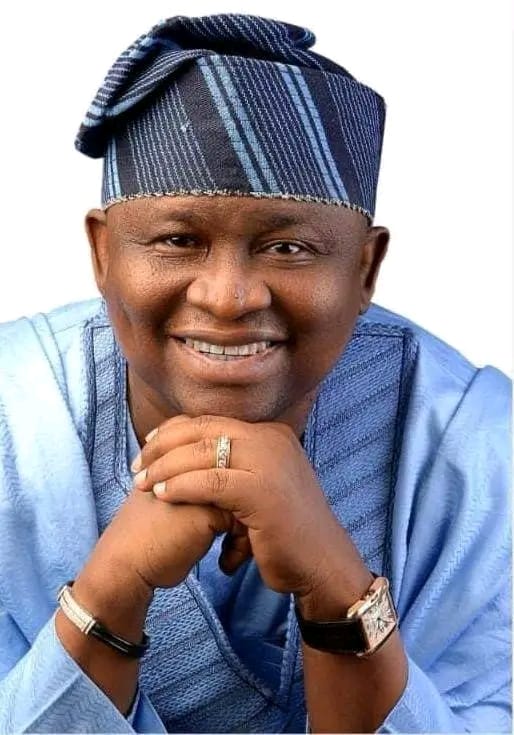
His adversaries claim he is from Ekiti State. Senator Solomon Olamilekan Adeola, popularly known as Yayi, insists that he is an indigene of Ogun State. He has even threatened to seek legal redress. But seeking a court injunction may be unnecessary. It could amount to playing into the hands of those behind the controversy.
I have never met Yayi in my life. However, I believe this debate is unnecessary. Abayomi Hunye and Folake Marcus-Bello are among those advancing what I consider to be a misplaced position, apparently in the broader contest for the Ogun State governorship.

They have left the ball to kick the legs of the footballer. Those behind the allegation appear to have overlooked the complexities of history and identity in Yorubaland. The argument is, in my view, frivolous and petty.
Knowing Yoruba political culture, the question of whether Yayi has ancestral roots in Ekiti should not, by itself, determine his acceptance in Ogun State. Indeed, the controversy could have the opposite effect. I recently listened to a phone-in programme on radio on the issue, and many of the callers from Ogun State said they remained determined to support Yayi.
A leader of the Alliance for Yoruba Democratic Movement (AYDM) told me that his group, which he said comprises about 130 Pan-Yoruba groups, would mobilise in Ogun State, including through house-to-house outreach, in support of Yayi, partly in response to those questioning his origin.
“They are trying to destroy the Yoruba oneness and the fraternity that should guide Yoruba political history,” he told me.
Their position is simple: Yayi is Yoruba, and nothing more should be made of the issue.
The controversy surrounding Yayi’s origin could therefore have consequences far beyond the original allegation.
Who Is an Indigene?
Let us stretch the debate further: who is an indigene?
The dictionary defines an indigene as a person who is native to a particular place; an aboriginal or autochthon.
Senator Yayi was born in 1969 and is now 57 years old. Public biographical records state that he was born in Lagos and raised and educated there, while accounts of his family background identify his paternal roots with Ilaro in Ogun State.
Let us face it: I do not know what informed the position of those behind these claims. However, they may be relying on the argument that Yayi has no roots in Ogun State because his family may have migrated there from another part of Yorubaland.
That, in itself, is a weak argument.
Before the creation of Ogun State in 1976, the territory that now constitutes the state was inhabited by various Yoruba communities and groups, including the Egba, Yewa, Ijebu-Remo, Awori and others. Migration has always been part of the history of Yorubaland.
There are several ways in which a person may establish a connection to a place: through birth, ancestry, longstanding settlement by one’s family, or through whatever constitutional or legal provisions apply. The question of indigeneity, therefore, cannot always be reduced to the place where one’s ancestors lived generations ago.
Human Migration in Yoruba History
A significant proportion of the population of what is today Ogun State has roots in different parts of Yorubaland. Between the 14th and 18th centuries, various Yoruba wars and conflicts contributed to waves of migration and the emergence of communities whose histories are interconnected.
Consider Ilaro, in the Yewa area. Historical accounts trace the establishment of the town to Aro, a hunter from Ile-Ife, while traditions also connect the town’s early leadership to Oyo.

The history of Ayetoro, another significant Yewa community, also reflects the movement of people across different parts of the region.
Abeokuta, the capital of Ogun State, provides perhaps one of the clearest examples of migration and the formation of communities through the coming together of different Yoruba groups. The city emerged in the 19th century as people fleeing conflicts and wars settled in the area.
The point of this argument is simple: many of today’s families in Ogun State, as in other parts of Yorubaland, have histories that involve migration from different towns and communities, including places outside the present boundaries of Ogun State.
It is therefore not impossible for people attacking Yayi over his alleged ancestral origin to have families whose own histories can be traced to Ekiti, Ondo, Igbomina, Oyo or other parts of Yorubaland.
There is hardly any Yoruba state today without a history of migration. Visit Ekiti State, for instance, and you will find families with roots in Ogun State. The reverse is also true.
The history of Yorubaland is a history of movement, interaction, intermarriage, settlement and the formation of new communities. Present-day state boundaries cannot always capture the complexity of these historical relationships.
Pastor Enoch Adejare Adeboye, for example, was born in Ifewara, now in Osun State, and his official biography identifies Ifewara as his birthplace.
This broader history demonstrates why questions of ancestry and indigeneity should be approached with care. Even where a person’s ancestors migrated from another part of Yorubaland generations ago, that does not automatically erase the roots subsequently established by the family in its new home.
If Yayi’s ancestors did migrate from another part of Yorubaland, the relevant question should be whether he has established legitimate roots and connections in Ogun State, rather than reducing the debate to where a distant ancestor may have originated.
ALSO READ: Ekiti College Waxes Stronger Under Femi Thomas’ Watch
Yayi’s grandparents may have migrated from outside Ogun State, just as the ancestors of many of those raising the argument may have migrated from elsewhere.
That is why using ancestral migration as a political weapon can be problematic. The same historical argument could potentially be applied to numerous families across Yorubaland.
The controversy, therefore, deserves a broader historical perspective rather than a narrow political interpretation.
Yayi and the Constitution
There is also a constitutional question: is Yayi constitutionally qualified to aspire to become governor of Ogun State?
The Constitution of the Federal Republic of Nigeria sets out the qualifications and disqualifications for election to the office of governor. Questions concerning a candidate’s eligibility should therefore be determined by the applicable constitutional and electoral provisions rather than by political rhetoric alone.
Politicians should learn to approach such sensitive questions with greater decorum.
I see the current argument as unnecessary. Political contests should be about ideas, programmes, competence, records and the issues that matter to the people, rather than attempts to disqualify an individual from belonging to a particular community based solely on disputed questions of ancestry.
If I have my way, any Yoruba person who satisfies the constitutional requirements should be free to contest elections in any Yoruba state, subject of course to the applicable laws and electoral rules.
The history of Nigerian politics already contains examples of people contesting and representing constituencies outside the places associated with their ancestral origins. The broader point is that citizenship, constitutional eligibility and political representation should not be confused with simplistic arguments about ancestry.
The question surrounding Yayi’s origin should therefore be subjected to history, facts and the Constitution, rather than political name-calling.
The people of Ogun State will ultimately determine whom they support through the electoral process.
What should matter is that the process remains peaceful, lawful and focused on the issues that affect the people.