From Classrooms to Global Competitiveness: How President Bola Ahmed Tinubu Is Rebuilding Nigeria’s Education for the 21st Century
A Feature Analysis of the Renewed Hope Revolution in Nigeria’s Education Sector
Education remains the greatest investment any nation can make in its future. It is the foundation upon which economic prosperity, technological innovation, national security, and social progress are built. Nations that prioritize education invariably dominate global affairs, while those that neglect it often struggle with poverty, unemployment, insecurity, and underdevelopment.
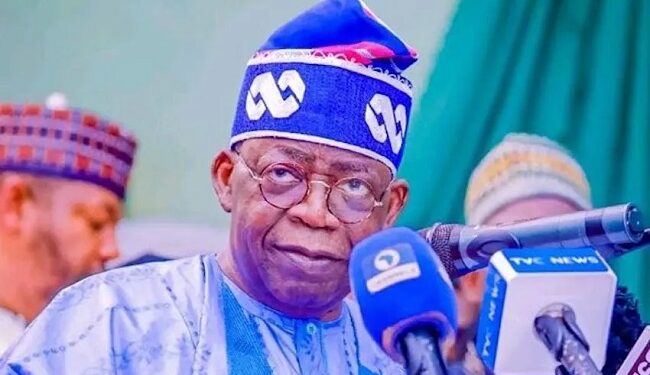
Since assuming office on May 29, 2023, President Bola Ahmed Tinubu has placed education among the strategic pillars of his Renewed Hope Agenda. Rather than treating education as merely another government responsibility, the Tinubu administration has increasingly positioned it as a catalyst for national transformation. His administration is pursuing reforms aimed at expanding access, improving infrastructure, strengthening technical education, increasing student financing, promoting digital learning, and restoring confidence in Nigeria’s educational system.

Breaking the Financial Barrier: Student Loans and Increased Funding
For decades, countless talented young Nigerians abandoned their education because their families could not afford tuition and related expenses.

One of the administration’s landmark initiatives to combat this is the Nigerian Education Loan Fund (NELFUND), which provides interest-free loans to eligible students in public tertiary institutions. Through the student loan programme, thousands of students now have greater opportunities to pursue higher education without immediate financial hardship. This initiative represents a significant shift from rhetoric to practical support for educational access.
Beyond individual student support, education financing has received renewed attention through higher budgetary allocations and intervention funds. Federal universities, polytechnics, colleges of education, and unity schools have continued to benefit from funding for infrastructure rehabilitation, classroom construction, hostels, laboratories, libraries, and modern teaching facilities. The administration has also sustained support through intervention agencies that finance institutional development and research.
Empowering the Workforce: TVET, Digital Learning, and STEM
Technology is redefining education globally, and the future of work demands practical skills.
Recognising that university education alone cannot solve Nigeria’s employment challenges, the Tinubu administration has intensified efforts to strengthen Technical and Vocational Education and Training (TVET). Modern economies depend heavily on artisans, technicians, engineers, software developers, and skilled professionals. By encouraging vocational education, skills acquisition, innovation, entrepreneurship, and digital competence, the government is preparing Nigerian youths for productive careers while reducing unemployment.
To ensure students are prepared for the rapidly evolving global knowledge economy, the Federal Government has championed initiatives aimed at integrating digital technologies into teaching and learning. Schools are increasingly being encouraged to embrace Information and Communication Technology (ICT), digital literacy, online learning platforms, artificial intelligence awareness, coding education, and smart classrooms.
This is heavily supported by a stronger emphasis on Science, Technology, Engineering and Mathematics (STEM). Universities and research institutions are now expected to play greater roles in solving national challenges through locally developed solutions and technological innovation. These initiatives complement formal education by equipping graduates with the exact competencies required in today’s competitive labour market.
ALSO READ: Cold War In Ekiti APC As Incumbent Lawmaker, Party Candidate Battle Each Other
Strengthening the Foundation: Basic Education and Teachers
Foundational learning remains central to sustainable national development. The administration has supported programmes designed to improve access to quality basic education through classroom construction, renovation of public schools, instructional materials, and expanded enrolment initiatives. Particular attention has also been directed toward reducing the number of out-of-school children through collaborative efforts involving federal, state, and development partners.
However, no education system can rise above the quality of its teachers. Recognising this reality, the government has continued programmes that promote teacher training, professional development, curriculum improvement, and enhanced instructional delivery. Building a motivated and competent teaching workforce remains essential to improving learning outcomes nationwide.

Infrastructure Renewal Across Educational Institutions
Many public educational institutions suffered years of infrastructural decay. Current interventions have focused on upgrading classrooms, lecture theatres, laboratories, libraries, hostels, water supply, electricity, internet connectivity, and other essential facilities. Improved infrastructure creates an environment that is far more conducive to effective teaching, learning, and research.
The Reality: Acknowledging the Challenges
While notable progress has been recorded, significant challenges still require sustained attention. Issues such as inadequate infrastructure in some schools, teacher shortages, insecurity affecting education in parts of the country, learning poverty, funding gaps, and disparities between urban and rural schools remain important priorities.
Addressing these challenges will require continued collaboration among the Federal Government, state governments, local authorities, private sector organisations, development partners, parents, and communities.
ALSO READ: Fakanle, Federal Commissioner Explains Mission
The Road Ahead: Education as a Tool for National Development
Education is a marathon, not a sprint. Beyond classrooms and examinations, education shapes responsible citizenship, national unity, innovation, and economic productivity.
President Tinubu’s education reforms are designed not only to increase school enrolment but also to build human capital capable of driving industrialisation, attracting investment, creating jobs, and positioning Nigeria as a leading African knowledge economy. The reforms introduced under the Renewed Hope Agenda represent important building blocks toward creating an education system that is more inclusive, technologically driven, globally competitive, and responsive to national development needs.
The future of Nigeria will ultimately depend not on its natural resources alone, but on the quality of education it provides to its people. Whether history ultimately judges these reforms as transformational will depend on their consistent implementation, transparency, measurable outcomes, and continuity. Nevertheless, the direction of policy demonstrates a clear recognition: investing in education is, ultimately, an investment in Nigeria’s future.
About the Author Malam T. S. Salami is the Convener and Director-General of the Asiwaju Solidarity Movement, based in Ado Ekiti, Ekiti State, Nigeria.